
 Image 1 of 1
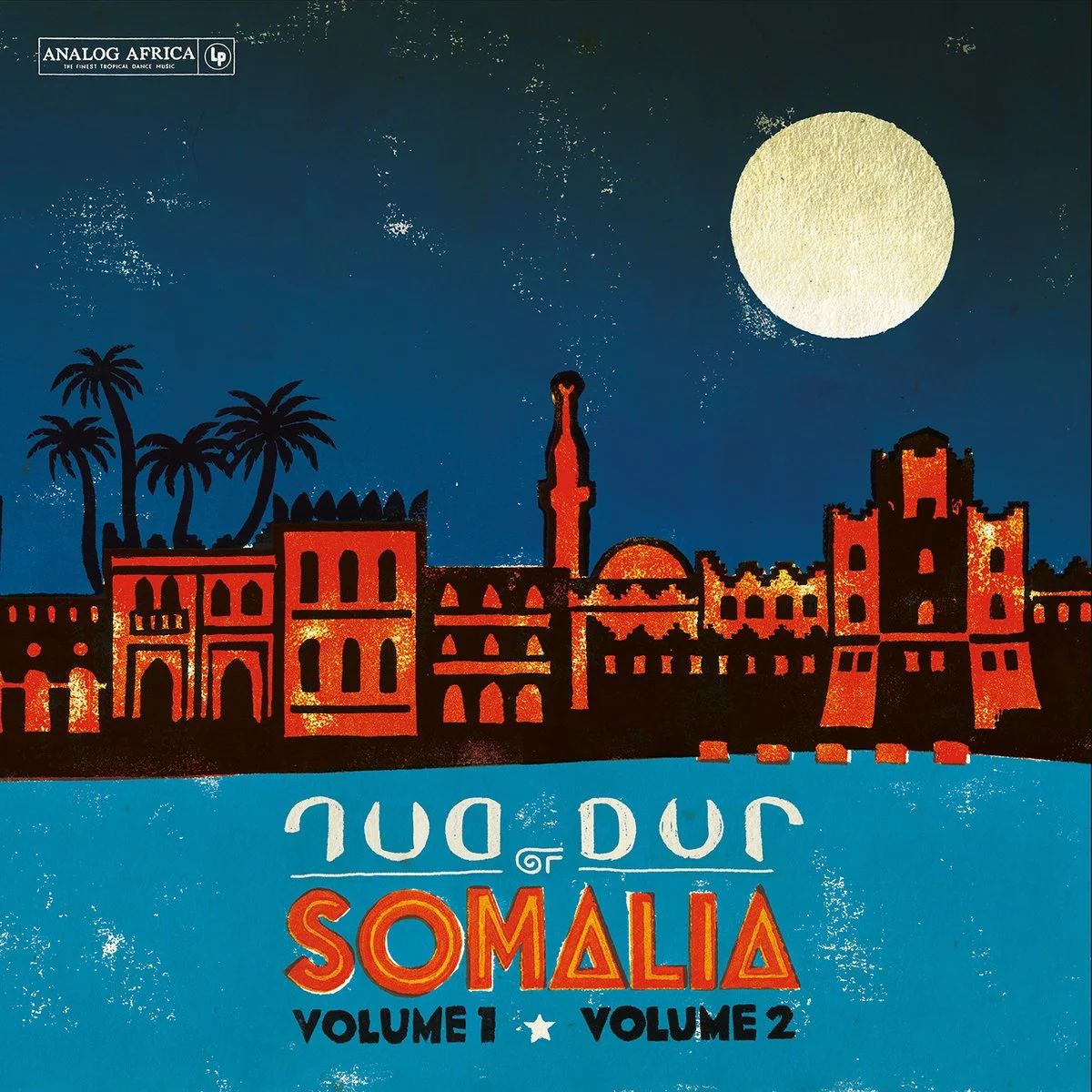
DUR DUR OF SOMALIA - VOLUME 1, VOLUME 2 & PREVIOUSLY UNRELEASED TRACKS (3LP)
On the bustling street of Mogadishu's Via Roma, people from all corners of society would gather at the Bar Novecento and Cafe
Cappucino, watch movies at the famous Supercinema, and eat at the numerous pasta hang-outs or the traditional restaurants that served Bariis Maraq, a somali Beef Stew mixed with delicious spiced rice. The same street was also home to Iftinphone and Shankarphone, two of the city’s best known music shop. Located opposite each other, they were the centre of Somalia’s burgeoning cassette distribution network. Both shops, run by members of the legendary Iftin Band, would become first-hand witnesses to the meteoric rise of Dur-Dur, a rise that climaxed in April of 1987 with the release of Volume 2, their second album.
The first single ‘Diinleya’ had taken Somalian airwaves by storm in a way rarely seen before or since. The next single, ‘Dab,’ had an even greater impact, and the two hits had turned them into the hottest band in town. In addition to their main gig as house band at the legendary Jubba Hotel, Dur-Dur had also been asked to perform the music for the play “Jascyl Laba Ruux Mid Ha Too Rido” (May one of us fall in love) at Mogadishu’s national theatre. The play was so successful that the management had been forced to extend the run by a month, throwing the theatre’s already packed schedule into complete disarray; and each night, as soon as the play had finished, Dur-Dur had to pack their instruments into a Volkswagen T1 tour bus that would shuttle them across town in time for their hotel performance.
The secrets to Dur-Dur’s rapid success is inextricably linked to the vision of Isse Dahir, founder and keyboard player of the band. Isse´s plan was to locate some of the most forward-thinking musicians of Mogadishu´s buzzing scene and lure them into Dur-Dur. Ujeeri, the band’s mercurial bass player was recruited from Somali Jazz and drummer extraordinaire Handal previously played in Bakaka Band. These two formed the backbone of Dur-Dur and would become one of Somalia’s most extraordinary rhythm sections.
Isse also added his two younger brothers to the line-up: Abukar Dahir Qassin was brought in to play lead guitar, and Ahmed Dahir Qassin was hired as a permanent sound engineer, a first in Somalia and one of the reasons that Dur-Dur became known as the best-sounding band in the country.
On their first two albums, Volume 1 and Volume 2, three different singers traded lead-vocal duties back and forth. Shimaali, formerly of Bakaka Band, handled the Daantho songs, a Somalian rhythm from the northern part of the country that bears a striking resemblance to reggae; Sahra Dawo, a young female singer, had been recruited from Somalia’s national orchestra, the Waaberi Band. Their third singer, the legendary Baastow, whose nickname came from the italian word ‘pasta’ due to the spaghetti-like shape of his body, had also been a vocalist with the Waaberi Band, and had been brought into Dur-Dur due to his deep knowledge of traditional Somali music, particularly Saar, a type of music intended to summon the spirits during religious rituals. These traditional elements of Dur-Dur’s repertoire sometimes put them at odds with the manager of the Jubba Hotel who once told Baastow “I am not going to risk having Italian tourists possessed by Somali spirits. Stick to disco
and reggae.”