 Image 1 of 1
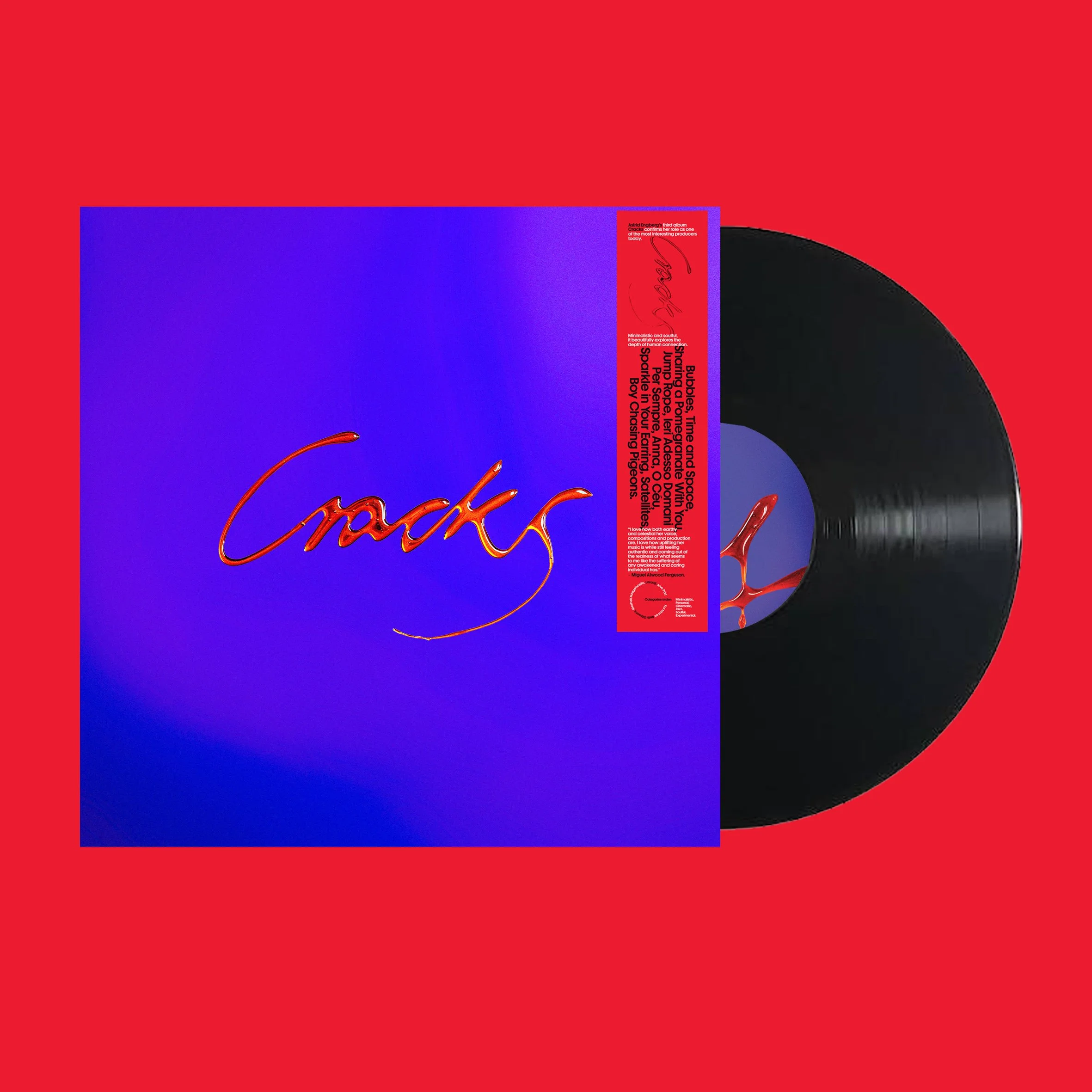
Astrid Engberg 'Cracks' - September 18
What if paying attention has become a radical act? It's a question that runs through Cracks, the
third album from Danish composer, producer and vocalist Astrid Engberg. Copenhagen-based Astrid
shuns the relentless pace and digitisation of modern life to celebrate moments most people pass
without noticing: a woman blowing soap bubbles outside her daughter's kindergarten, teenagers
skipping rope in a city square, sunlight catching the sparkle of her partner's earring, a young boy
chasing pigeons, a comforting phone call from a sister, the stillness of a church in Assisi, Italy.
These aren't simply observations. They're vital reminders that wonder still exists, and that not
everything of value can be capitalised.
"I don't want things," she sings on ‘Time and Space’. Her need for more of time and space became
the guiding principle behind Cracks. Written from a place of growing confidence and
self-acceptance, the album embraces her sensitivity. "This album is about owning sensitivity. I've
always been super sensitive and used to question this. It can feel like a burden, but it's also
something beautiful because you see things, you know things, you see people for who they are."
She says that perspective comes both from the person she has always been and from learning to
slow down while taking care of her own mental health having suffered with anxiety. "Everything
that can seem like appreciating light, or looking for the light, comes from darkness as well, I guess."
For her, paying attention has been a quiet act of resistance. "For years it's been clear to me that
slowing down to observe is political. It amazes me how people will call you radical for wanting to
sense the world rather than optimise everything and get to your deathbed the fastest way possible.
I proudly carry and share this sensitivity, and way of embracing an unhurried pace in my music.”
While previous albums Tulpa and Trust spanned nu-jazz, modern soul and R&B, Astrid is now
steering towards contemporary folk and acoustic jazz, playing electric guitar, flutes, and polyphonic
keyboard the Mellotron. It's built from fewer layers, no drums and little dramatic variation in
instrumentation. Vocals often remain first takes, imperfections intact. Rather than chasing technical
perfection, she wanted performances that sounded unmistakably human.
That philosophy unexpectedly spilled into real life. When third single ‘O Céu’ was incorrectly flagged
as AI-generated by a digital distributor, Astrid was required to submit stems, session files and
documentation of her creative process before it was approved for release. The story quickly spread
across Danish and Swedish national media, prompting wider discussion around AI verification,
authorship and the growing burden placed on artists to prove the humanity of their work.
"In the beginning it felt ironic," she says. "I even joked that I was going to go out and do human
things with humans. But after ten days it became sad. I got hit by a deep sadness of dystopia.”
Many of the songs were born from moments experienced in Copenhagen's shared public spaces.
‘Bubbles’ with the woman who she recognised as a misfit, who occasionally fills the air outside a
kindergarten with soap bubbles, delighting children she has no obligation to entertain. ‘Jump Rope’
elevates the teens playing together with nothing more than a skipping rope, and ‘Boy Chasing
Pigeons’ transforms a chaotic morning into one of unexpected joy after watching a child run freely
through a square, reminding her of that feeling of pure freedom and enjoyment we have as kids.
Rather than consciously setting out to preserve these encounters, Astrid says the songs arrive after
she's fully lived them. "It's not like I experience a moment and think, 'I want to preserve this.' It's
more like if there's a moment I enjoy or experience, I soak it into my body, and then the song comes.
I'm creating a sonic diary of these moments that I can go back to if I feel stressed. My body
remembers that moment of grace.”
Celebrated multi-instrumentalist and composer Miguel Atwood-Ferguson, renowned for his work
with Ray Charles, Flying Lotus and Thundercat, returns as a collaborator on Cracks following his
appearances across Astrid's sophomore album Trust (2023). Continuing a creative partnership
rooted in a shared commitment to openness, generosity and human connection, Miguel features
on [X] tracks across the new record. Trust earned support from Crack, Bandcamp Daily, The FADER,
Groove, BBC Radio 6 Music, NTS, Rinse France and KEXP.
Other collaborators include UK jazz saxophonist Miles Spilsbury, whose expressive playing features
on ‘Sharing a Pomegranate With You’, and Brazilian vocalist Nina Maia, whose collaboration on ‘O
Céu’ grew from months of voice-note conversations between Copenhagen and São Paulo, evolving
into a multilingual meditation on solitude, creativity and the women who came before them.
"Cracks invites people to stay with the moment and notice the world. I’d love that." Astrid also
hopes that listeners leave her concerts carrying that feeling with them. "People should feel like they
can come as they are. That they don't have to be a certain thing, just be. Maybe they'll hug
someone they love instead of picking up their phone. Maybe they'll walk the dog and look at the
trees instead of stressing in their head. There is so much beauty in the world. Little things, you know.
They change everything."
What if paying attention has become a radical act? It's a question that runs through Cracks, the
third album from Danish composer, producer and vocalist Astrid Engberg. Copenhagen-based Astrid
shuns the relentless pace and digitisation of modern life to celebrate moments most people pass
without noticing: a woman blowing soap bubbles outside her daughter's kindergarten, teenagers
skipping rope in a city square, sunlight catching the sparkle of her partner's earring, a young boy
chasing pigeons, a comforting phone call from a sister, the stillness of a church in Assisi, Italy.
These aren't simply observations. They're vital reminders that wonder still exists, and that not
everything of value can be capitalised.
"I don't want things," she sings on ‘Time and Space’. Her need for more of time and space became
the guiding principle behind Cracks. Written from a place of growing confidence and
self-acceptance, the album embraces her sensitivity. "This album is about owning sensitivity. I've
always been super sensitive and used to question this. It can feel like a burden, but it's also
something beautiful because you see things, you know things, you see people for who they are."
She says that perspective comes both from the person she has always been and from learning to
slow down while taking care of her own mental health having suffered with anxiety. "Everything
that can seem like appreciating light, or looking for the light, comes from darkness as well, I guess."
For her, paying attention has been a quiet act of resistance. "For years it's been clear to me that
slowing down to observe is political. It amazes me how people will call you radical for wanting to
sense the world rather than optimise everything and get to your deathbed the fastest way possible.
I proudly carry and share this sensitivity, and way of embracing an unhurried pace in my music.”
While previous albums Tulpa and Trust spanned nu-jazz, modern soul and R&B, Astrid is now
steering towards contemporary folk and acoustic jazz, playing electric guitar, flutes, and polyphonic
keyboard the Mellotron. It's built from fewer layers, no drums and little dramatic variation in
instrumentation. Vocals often remain first takes, imperfections intact. Rather than chasing technical
perfection, she wanted performances that sounded unmistakably human.
That philosophy unexpectedly spilled into real life. When third single ‘O Céu’ was incorrectly flagged
as AI-generated by a digital distributor, Astrid was required to submit stems, session files and
documentation of her creative process before it was approved for release. The story quickly spread
across Danish and Swedish national media, prompting wider discussion around AI verification,
authorship and the growing burden placed on artists to prove the humanity of their work.
"In the beginning it felt ironic," she says. "I even joked that I was going to go out and do human
things with humans. But after ten days it became sad. I got hit by a deep sadness of dystopia.”
Many of the songs were born from moments experienced in Copenhagen's shared public spaces.
‘Bubbles’ with the woman who she recognised as a misfit, who occasionally fills the air outside a
kindergarten with soap bubbles, delighting children she has no obligation to entertain. ‘Jump Rope’
elevates the teens playing together with nothing more than a skipping rope, and ‘Boy Chasing
Pigeons’ transforms a chaotic morning into one of unexpected joy after watching a child run freely
through a square, reminding her of that feeling of pure freedom and enjoyment we have as kids.
Rather than consciously setting out to preserve these encounters, Astrid says the songs arrive after
she's fully lived them. "It's not like I experience a moment and think, 'I want to preserve this.' It's
more like if there's a moment I enjoy or experience, I soak it into my body, and then the song comes.
I'm creating a sonic diary of these moments that I can go back to if I feel stressed. My body
remembers that moment of grace.”
Celebrated multi-instrumentalist and composer Miguel Atwood-Ferguson, renowned for his work
with Ray Charles, Flying Lotus and Thundercat, returns as a collaborator on Cracks following his
appearances across Astrid's sophomore album Trust (2023). Continuing a creative partnership
rooted in a shared commitment to openness, generosity and human connection, Miguel features
on [X] tracks across the new record. Trust earned support from Crack, Bandcamp Daily, The FADER,
Groove, BBC Radio 6 Music, NTS, Rinse France and KEXP.
Other collaborators include UK jazz saxophonist Miles Spilsbury, whose expressive playing features
on ‘Sharing a Pomegranate With You’, and Brazilian vocalist Nina Maia, whose collaboration on ‘O
Céu’ grew from months of voice-note conversations between Copenhagen and São Paulo, evolving
into a multilingual meditation on solitude, creativity and the women who came before them.
"Cracks invites people to stay with the moment and notice the world. I’d love that." Astrid also
hopes that listeners leave her concerts carrying that feeling with them. "People should feel like they
can come as they are. That they don't have to be a certain thing, just be. Maybe they'll hug
someone they love instead of picking up their phone. Maybe they'll walk the dog and look at the
trees instead of stressing in their head. There is so much beauty in the world. Little things, you know.
They change everything."